Lars Vogel · 19 October 2026
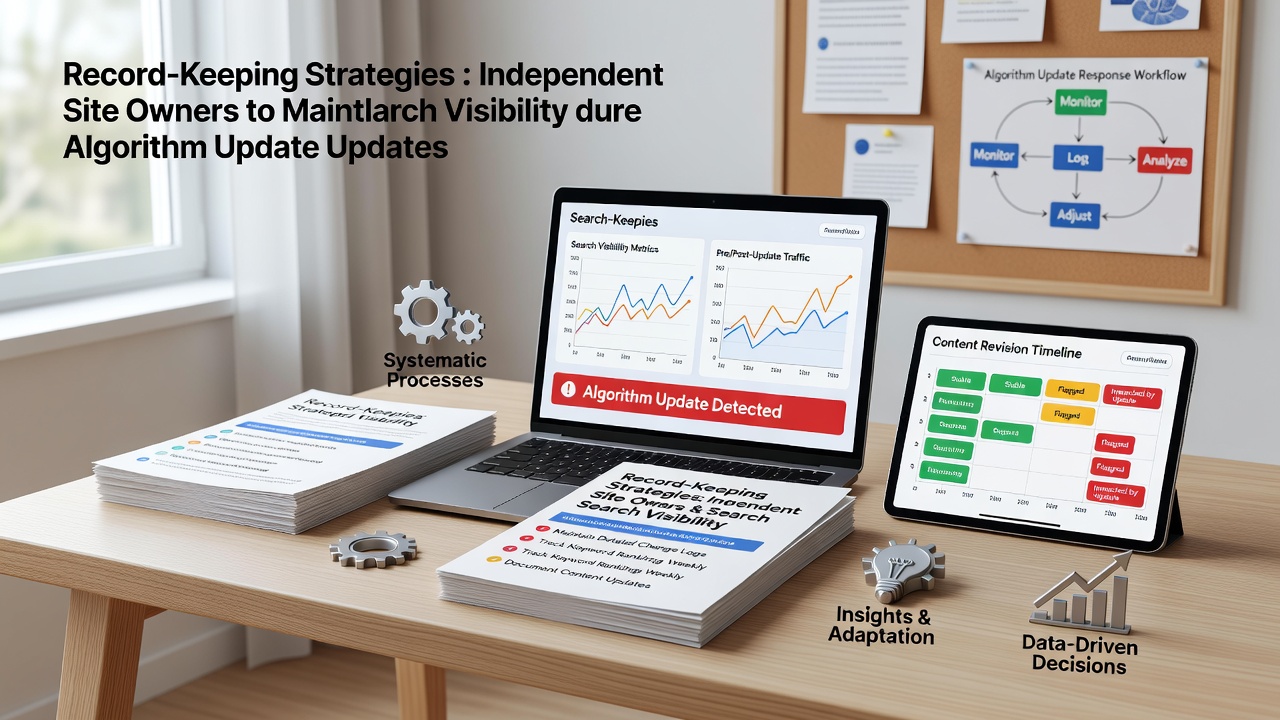
Record-Keeping Strategies That Help Independent Site Owners Maintain Search Visibility During Algorithm Updates
Independent site owners face recurring challenges when search engines roll out algorithm updates, and systematic record-keeping provides a practical foundation for tracking changes that affect visibility, because maintaining chronological logs of site modifications, performance metrics, and external signals allows operators to correlate specific actions with ranking shifts over time. Researchers at various academic institutions have documented how granular documentation helps isolate variables during periods of volatility, while data from search engine providers shows that sites with organized historical records recover faster after core updates.
Core Elements of Effective Documentation Practices
Site owners typically begin by establishing baseline records that capture daily or weekly snapshots of key performance indicators, including organic traffic volumes, keyword rankings, and crawl statistics, because these datasets create reference points that highlight deviations once an update occurs. According to resources available through Google's official documentation, transparent logging of content changes, technical adjustments, and backlink acquisitions supports post-update analysis, and many operators integrate automated tools that timestamp every modification without manual intervention. Those who maintain separate logs for on-page elements, such as title tags, meta descriptions, and internal linking structures, find that cross-referencing becomes straightforward when visibility drops suddenly.
Tracking External Signals and Content Evolution
Backlink profiles require ongoing documentation because inbound links often influence how algorithms evaluate authority, and independent publishers record acquisition dates, source domains, anchor text variations, and link placement contexts in structured spreadsheets or dedicated databases. In October 2026 several core updates emphasized freshness signals and user engagement metrics, prompting operators to log publication dates alongside performance data for older content that received refreshes. External industry reports indicate that sites preserving detailed archives of content revisions demonstrate clearer patterns when correlating update impacts with specific publishing cycles, whereas incomplete records leave gaps that obscure causal relationships.
Performance monitoring extends beyond rankings to include click-through rates, dwell times, and bounce rates pulled from analytics platforms, since these behavioral metrics frequently shift in tandem with algorithmic adjustments. Operators who export and archive these figures weekly create longitudinal datasets that reveal whether visibility changes stem from ranking movements or from altered user interaction patterns, and many combine these exports with server log files that document crawl frequency and error rates.

Tools and Systems for Consistent Record Maintenance
Spreadsheet applications remain popular for smaller operations because they allow custom columns for dates, change descriptions, and notes on observed outcomes, while database solutions scale better for sites with extensive page inventories. Those who've studied this process note that version control systems originally designed for code repositories adapt well to content tracking, automatically preserving historical versions of pages alongside metadata about who made changes adn when. Integration with third-party SEO platforms further automates data capture, yet operators still perform periodic manual audits to verify completeness and accuracy of automated entries.
Regular review cycles help maintain the utility of these records, because archived information loses value if not organized for quick retrieval during high-pressure periods following an update announcement. Teams often schedule monthly reviews that summarize traffic trends, flag anomalies, and update categories for different types of modifications, creating searchable indexes that speed up diagnosis when visibility metrics deviate from established baselines.
Applying Records During Recovery and Adaptation
When an update rolls out, owners consult their archives to identify the most recent changes preceding the visibility shift, because this comparison isolates potential triggers without relying on memory or incomplete recollections. Evidence from multiple industry analyses shows that documented rollback tests, where specific modifications are reversed on staging environments before live reimplementation, provide measurable insights into which elements contributed to ranking fluctuations. Academic studies on web ecosystems further suggest that preserving records of competitor site changes offers additional context, although access to such external data remains limited and requires careful sourcing from public archives.
Long-term benefits emerge when records accumulate across multiple update cycles, enabling pattern recognition that informs proactive adjustments rather than reactive fixes. Operators who maintain these histories report improved decision-making around content calendars and technical maintenance schedules, as historical correlations guide resource allocation toward activities that previously aligned with stable or improved visibility.
Conclusion
Systematic record-keeping equips independent site owners with the data needed to navigate algorithm updates methodically, because comprehensive logs of internal changes, external signals, and performance metrics support precise diagnosis and measured responses. Continued refinement of these practices aligns with evolving search engine methodologies, and organizations that treat documentation as an operational priority position their sites for sustained visibility across successive update cycles.