Lars Vogel · 21 September 2026
The Dynamics of Peer-to-Peer Link Exchanges Among Independent Content Creators
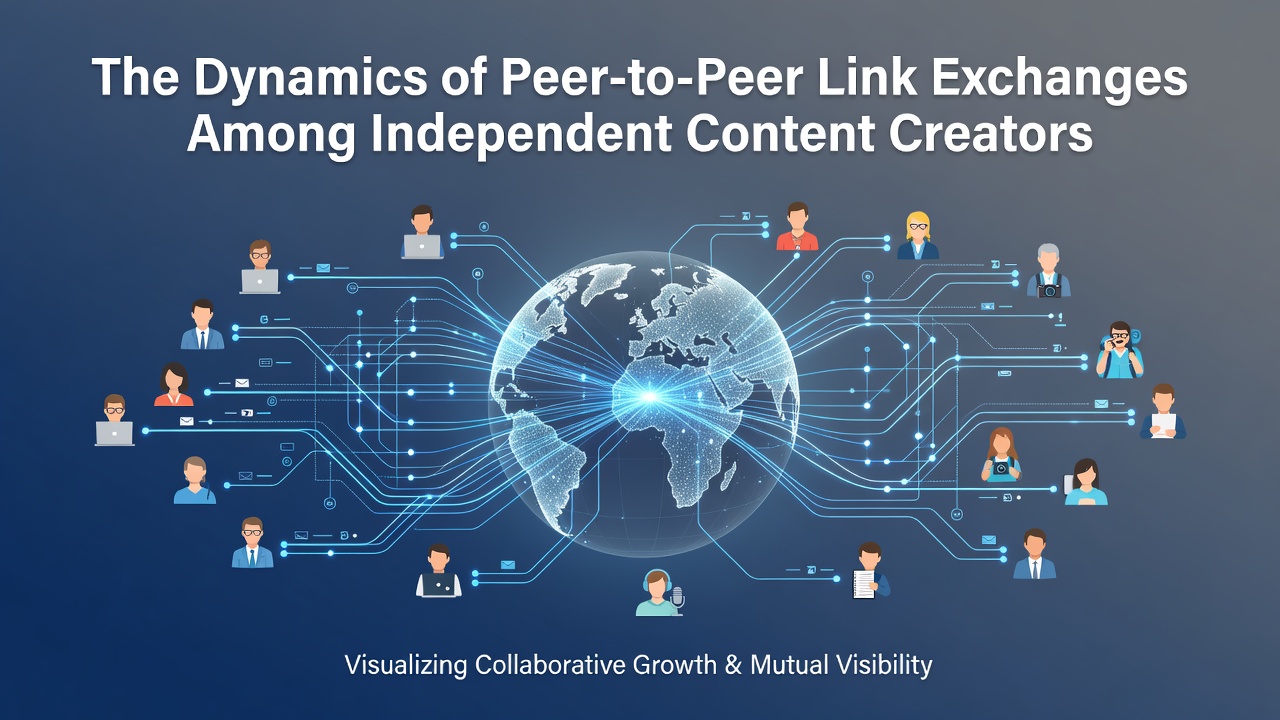
Independent content creators participate in peer-to-peer link exchanges to build connections that improve site authority and reach new audiences, and these arrangements typically involve direct agreements between site owners rather than through intermediaries or paid networks. Such exchanges occur across blogs, niche websites, and standalone digital properties where creators share links to relevant content in their respective fields. Researchers have documented patterns where these practices help smaller operators compete with larger platforms by leveraging mutual referrals.
Mechanics of Link Exchange Arrangements
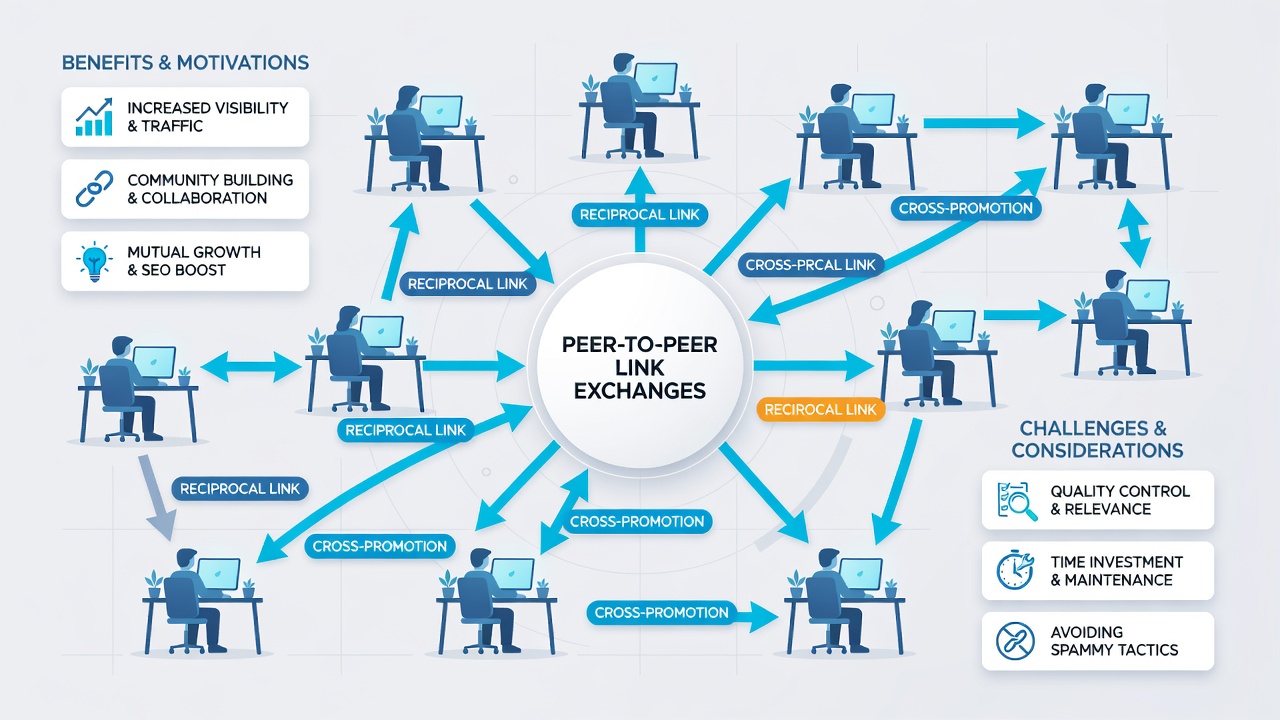
Creators initiate contact through email, social platforms, or dedicated forums, and they propose reciprocal links that align with topical relevance while meeting basic quality standards. One study revealed that successful exchanges often require matching domain authority levels and ensuring the linked content provides value to readers on both sides. Data indicates that participants track performance through analytics tools to measure referral traffic and ranking shifts over time. In practice, these deals range from simple one-for-one swaps to more complex networks involving multiple parties across related categories.
Search Engine Guidelines and Algorithm Responses
Search engines publish rules that distinguish between natural linking and manipulative schemes, and independent creators must navigate these boundaries when arranging exchanges. Figures from industry reports show that excessive or low-quality link swaps can trigger manual actions or algorithmic demotions. According to data compiled by the Australian Communications and Media Authority, online content practices have shifted toward greater transparency in linking relationships as algorithms grow more sophisticated at detecting patterns. Observers note that updates in September 2026 emphasized context and user intent over simple link counts, prompting creators to refine their exchange criteria accordingly.
Those who study these dynamics find that relevance remains a core factor, with algorithms rewarding links embedded in substantive articles rather than sidebar placements or footer sections. Evidence suggests that creators who document their exchanges and maintain editorial standards experience fewer penalties compared to those who scale operations too quickly.
Data Patterns and Participation Trends
Surveys conducted by research institutions reveal that a significant portion of independent sites rely on peer networks for initial link acquisition before expanding to other methods. Statistics Canada reports on digital economy participation highlight how smaller content operations use reciprocal linking to establish baseline visibility in crowded niches. Participants often categorize exchanges by type, including guest post contributions, resource page mentions, and contextual references within existing articles.
What's interesting is the geographic distribution of these activities, with creators in different regions forming cross-border connections that diversify traffic sources. One analysis found that exchanges involving educational or how-to content tend to sustain longer-term value because they align with evergreen search queries. Researchers discovered that monitoring tools help participants identify when links lose effectiveness due to site changes or algorithm shifts.
Challenges in Maintaining Effective Exchanges
Independent creators face issues around link quality, relevance decay, and the time required to manage ongoing relationships. Data shows that broken links or site migrations can disrupt established agreements, requiring regular audits. Those who've examined participation rates note that successful practitioners dedicate resources to vetting potential partners through traffic analysis and content audits before committing to exchanges.
Regulatory perspectives from bodies such as the European Commission on digital markets emphasize disclosure when commercial relationships influence linking decisions. Creators integrate these considerations by keeping exchanges editorial in nature and avoiding any appearance of paid placements without proper labeling.
Conclusion
Peer-to-peer link exchanges continue to serve as a foundational tactic for independent content creators seeking to strengthen their positions in digital spaces. Research indicates that adherence to relevance, quality, and transparency guidelines supports sustained outcomes, while evolving algorithms in periods such as September 2026 influence how these practices adapt. Data from multiple sources demonstrates measurable impacts on traffic and authority when exchanges follow established patterns observed across the creator community.