Finley Braun · 16 November 2026
Tracing the Spread of Fabricated Vocabulary Across Niche Online Networks and Its Effects on Community Formation
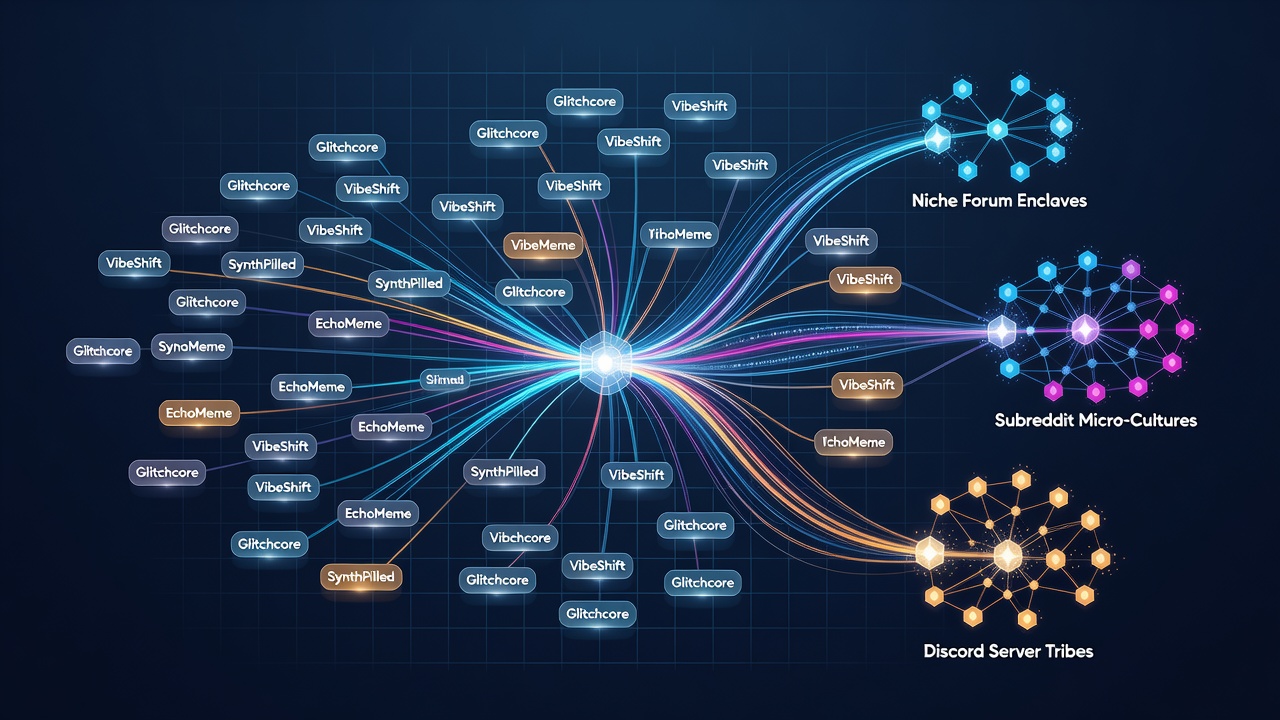
Observers note that fabricated vocabulary arises in niche online networks when users blend existing words with invented elements to create shorthand expressions that signal insider status, and this process accelerates through repeated interactions in closed forums, Discord servers, and subreddit threads where participants refine and propagate these terms over successive exchanges. Researchers have tracked how such language elements originate in small clusters before migrating to adjacent communities via cross-posting and shared members, which creates traceable pathways documented in linguistic studies of digital environments.
Mechanisms Driving Vocabulary Diffusion
Patterns emerge when moderators and active contributors introduce novel phrases during discussions of specialized topics, after which adoption spreads through upvotes, replies, and direct quotations that embed the terms into group memory, while data from network analyses show that high-engagement posts serve as primary vectors for wider circulation across platforms. Studies indicate that algorithmic recommendations on sites like Reddit and Twitter amplify visibility for threads containing these terms, leading to influxes of new users who encounter and sometimes adapt the vocabulary to fit their own contributions.
Role of Platform Features in Term Adoption
Platform affordances such as character limits, emoji integrations, and hashtag systems encourage compression of complex ideas into fabricated terms that travel efficiently, and analyses of chat logs reveal that synchronous environments like Twitch channels accelerate this through real-time repetition and variation by streamers and viewers alike. Evidence from archival reviews demonstrates that once a term gains traction in one niche, it often appears in related spaces within weeks, facilitated by overlapping user bases who maintain multiple accounts or participate in cross-community events.
Impact on Group Identity and Boundaries
Communities form tighter bonds when members share a lexicon of fabricated terms that outsiders struggle to interpret, which fosters exclusivity and reinforces collective identity through inside jokes and references that evolve rapidly in response to external events or internal developments. Quantitative reviews of message corpora reveal correlations between vocabulary density and retention rates, as groups with distinctive linguistic markers exhibit higher participation consistency compared to those relying solely on standard language.
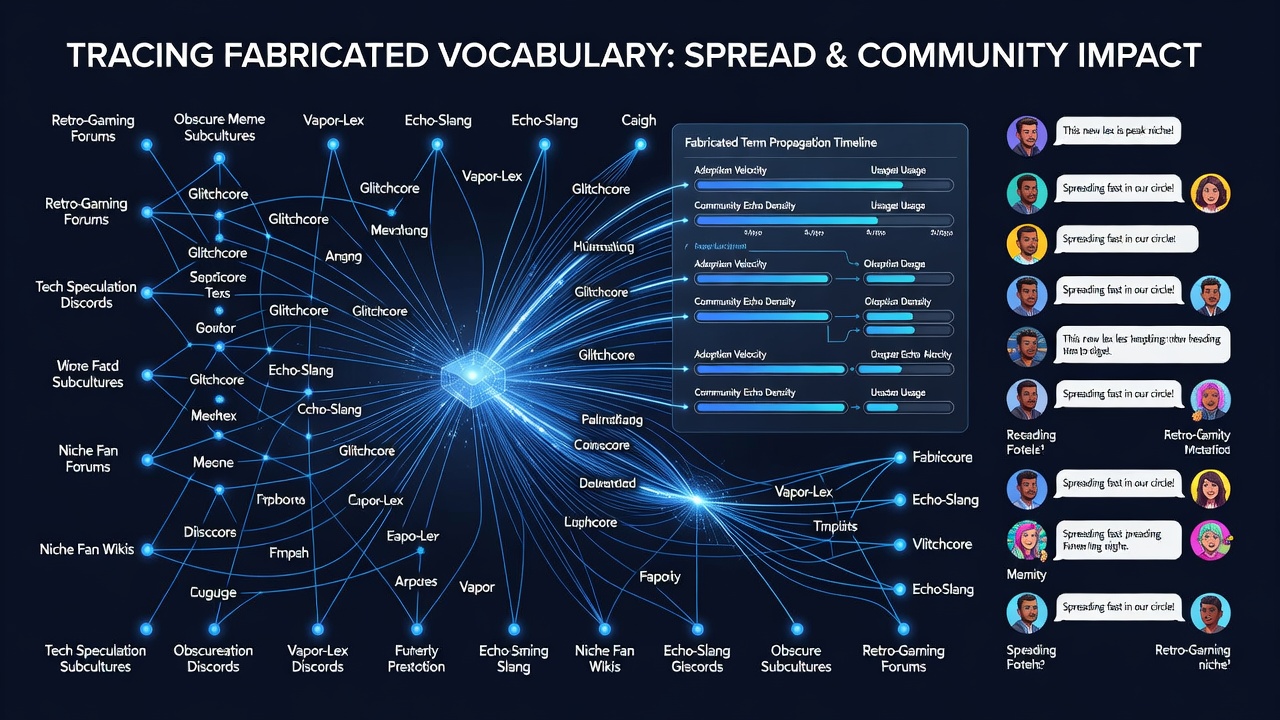
Gatekeeping behaviors appear when established members correct or expand upon newcomers' usage of these terms, which serves to educate while simultaneously delineating experienced participants from novices, and longitudinal observations confirm that successful integration often hinges on accurate deployment of the evolving vocabulary during initial interactions. In November 2026, reports from distributed research networks highlighted continued growth in such linguistic practices amid rising platform fragmentation, with metrics indicating sustained effects on how subgroups coalesce around shared terminologies.
Documented Examples Across Different Niches
Take one gaming community where fabricated verbs denoting specific strategies spread from a single Discord channel to multiple Twitch streams, resulting in organized events that further entrenched the terms and attracted participants seeking to master the associated gameplay styles. Similar dynamics surface in hobbyist forums focused on coding or crafting, where invented nouns for tools or techniques create shorthand that streamlines collaboration yet requires newcomers to invest time in learning the conventions before full participation occurs.
Research indicates that these processes vary by region, with North American networks showing faster term mutation rates than counterparts in Australia or the European Union, according to comparative datasets compiled by academic consortia. Pew Research Center analyses of digital interaction patterns provide supporting figures on how language innovation correlates with community persistence across diverse platforms.
Broader Patterns in Network Evolution
Network mapping tools applied to public data illustrate how fabricated vocabulary clusters align with connection densities, forming subgraphs where term frequency predicts subgroup stability over multi-month periods, while external shocks such as platform policy changes can either disrupt or redirect these flows depending on how users adapt their linguistic strategies. Canadian government digital economy reports document parallel trends in language adaptation within regional online spaces, offering metrics that complement findings from other jurisdictions.
Measurement Challenges and Available Data
Quantifying spread requires scraping and natural language processing techniques applied to timestamped archives, which yield timelines showing exponential growth phases followed by stabilization or replacement by newer inventions, and such methods have been validated in peer-reviewed work from institutions tracking internet linguistics. Those who study these phenomena note that ethical considerations limit access to private groups, resulting in datasets skewed toward publicly visible exchanges yet still sufficient to identify core diffusion mechanics.
Conclusion
Overall, the circulation of fabricated vocabulary through niche online networks contributes directly to community formation by establishing shared linguistic resources that facilitate recognition, coordination, and boundary maintenance among participants. Continued monitoring through established research channels will clarify how these dynamics interact with evolving platform architectures and user demographics in coming periods.