Nils Reed · 5 October 2026
Unpacking How Content Archival Practices Influence Search Rankings for Solo Digital Publishers in Evolving Web Ecosystems
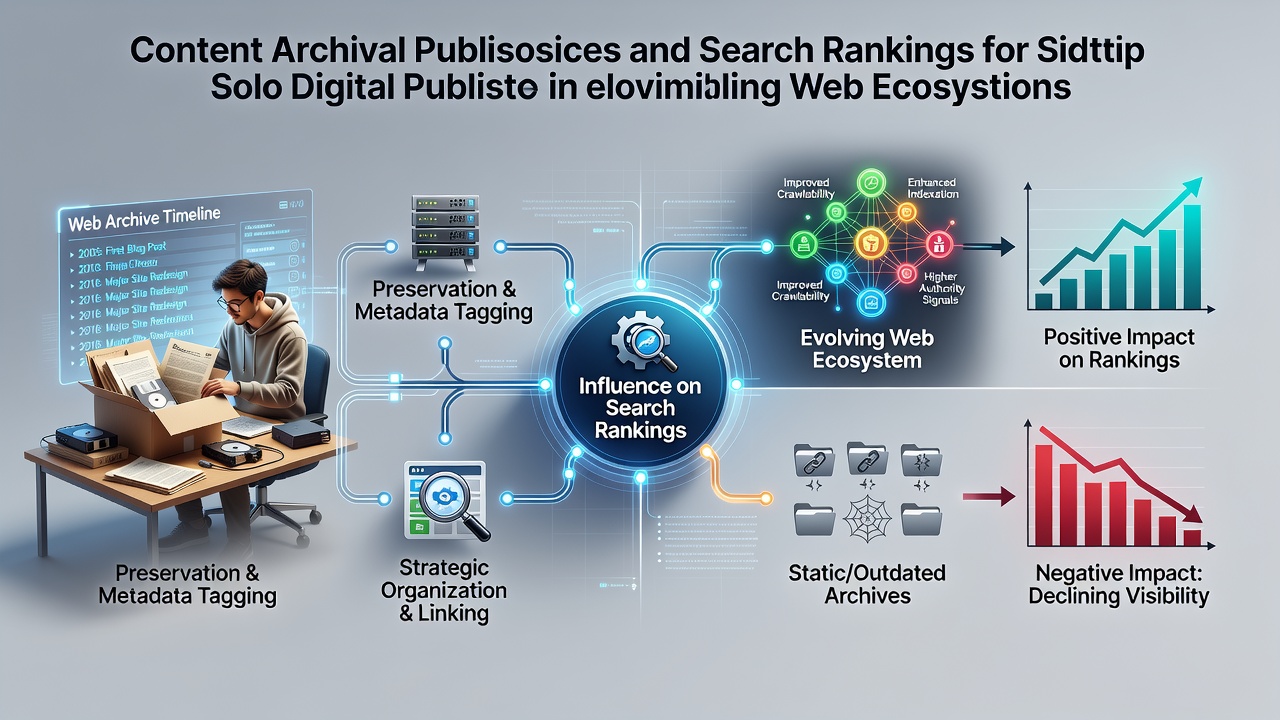
Content archival practices shape how search engines evaluate and rank material from independent publishers who operate without large teams or institutional support, and these methods continue to evolve alongside changes in crawling technology and user behavior patterns. Solo publishers often maintain extensive back catalogs that span years of updates, yet decisions about whether to preserve, redirect, or restrict access to older pages directly affect crawl budgets, index freshness signals, and historical authority metrics that algorithms weigh during ranking calculations.
Defining Content Archival in Solo Publishing Contexts
Archival approaches range from simple static backups stored offline to public implementations that leverage services such as the Internet Archive or custom database snapshots integrated with site architecture. Researchers have documented that these choices influence how search engines perceive content stability, because archived pages can supply consistent signals about topical authority when properly linked and indexed. Data from multiple regional studies indicates that publishers who systematically archive high-value older articles experience measurable differences in how crawlers allocate resources during site visits, particularly when new material appears alongside preserved historical entries.
Those who study independent web properties note that archival decisions frequently intersect with technical constraints common among solo operators, including limited server capacity and infrequent updates to content management systems. When older posts remain accessible through standard URLs without noindex directives, search engines continue to re-crawl them at intervals that depend on overall site authority and update frequency, which in turn shapes the distribution of ranking weight across the entire domain.
Search Engine Mechanisms and Archival Signals
Algorithms evaluate archived content through several overlapping lenses that include link equity retention, duplicate content detection, and temporal relevance scoring. Evidence collected by academic teams across North America and Europe shows that preserved pages can reinforce topical clusters when internal links connect them to newer material, thereby strengthening the site's overall semantic profile. At the same time, unrestricted archival copies sometimes trigger duplicate content filters if search engines identify near-identical versions without clear canonical declarations, leading to fragmented ranking signals that reduce visibility for the primary source.
October 2026 brought additional attention to these dynamics when multiple search platforms adjusted how they process historical content during major index refreshes. Observers tracking solo publisher performance reported shifts in how archived posts contributed to domain-level authority scores, especially for sites that had maintained consistent archival policies over multi-year periods. These adjustments highlighted the role of structured data markup in helping engines distinguish between active content and preserved reference material, a factor that solo operators can address through targeted schema implementation.
Practical Implications for Independent Operators
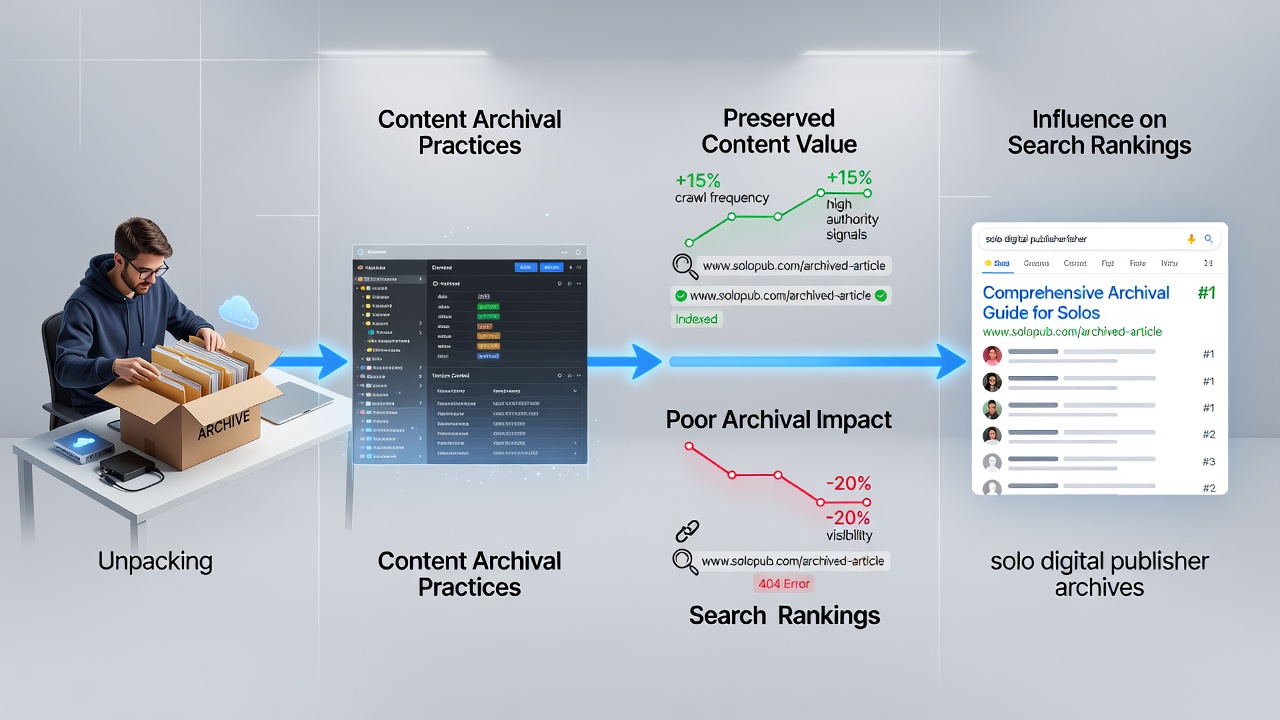
Solo publishers face distinct trade-offs when deciding which archival strategy aligns with their technical resources and ranking objectives. Some implement selective robots.txt rules that allow indexing of evergreen posts while blocking low-value archive pages, whereas others rely on server-side redirects that consolidate older URLs into updated canonical versions. Figures released by industry monitoring groups reveal that sites adopting the latter approach often see improved crawl efficiency, because search engines encounter fewer redundant paths during routine visits.
Link equity represents another dimension where archival choices matter. When external references point to pages that later become archived or removed, the absence of proper redirects can dilute accumulated authority. Studies conducted by research institutions in Australia and Canada have tracked how consistent redirect chains preserve value across content migrations, a consideration that gains importance as web ecosystems incorporate more dynamic elements such as AI-generated summaries and personalized result sets.
Emerging Ecosystem Factors
Web environments continue to incorporate new ranking variables tied to content freshness, user engagement depth, and cross-platform availability. Solo publishers who maintain accessible archives sometimes benefit when search engines reference historical material to establish baseline expertise, yet they must balance this against the risk of diluting focus on recently updated sections. Data compiled by governmental digital policy units in the European Union indicates that archival transparency practices correlate with stronger performance in regions where regulatory emphasis on information longevity influences indexing priorities.
Technical implementations such as XML sitemaps that separately list archived versus active content allow crawlers to allocate resources more effectively. Publishers who apply these distinctions report steadier indexing rates for core pages, particularly when combined with regular audits that identify broken links within older sections. The reality is that evolving crawler sophistication rewards deliberate archival planning over ad-hoc preservation methods.
Conclusion
Content archival practices exert measurable influence on search rankings for solo digital publishers through their effects on crawl allocation, authority retention, and content differentiation signals. As web ecosystems advance, the strategic management of historical material becomes an integral component of sustainable visibility rather than a secondary maintenance task. Those who align archival decisions with current indexing requirements position their sites to maintain relevance amid ongoing algorithmic refinements.